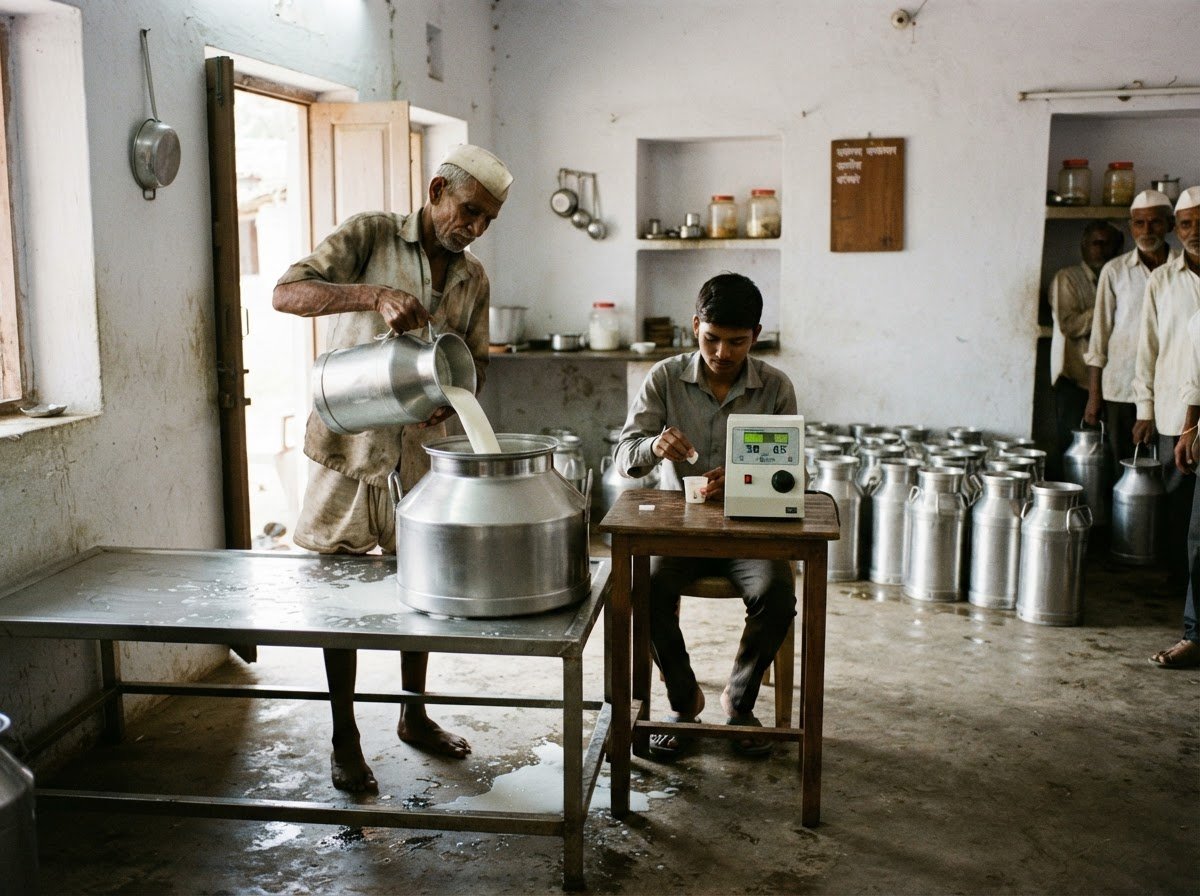
For most dairy farmers, the village collection centre is where their relationship with a dairy business begins and ends each day. It is also the first quality checkpoint in Morgan’s dairy chain.
Testing before anything else
When milk arrives at a centre it is tested before it is accepted, including fat and SNF (solids-not-fat) where applicable. Testing at this stage means problems are identified at source rather than after milk from many farmers has been combined.
Fat and SNF are the two measures most commonly used to describe milk composition. Recording them at collection gives both the farmer and the dairy a shared, transparent reference point.
From the centre to the cold chain
Once accepted, milk is chilled and moved through cold-chain transport to processing, where it is pasteurised and checked again. Each step depends on the one before it, which is why collection-level testing is treated as a foundation rather than a formality.
What farmers should do
Farmers who want to understand the testing process at their centre should speak with the local collection team. Centre-specific procedures and timings are always confirmed directly by Morgan.